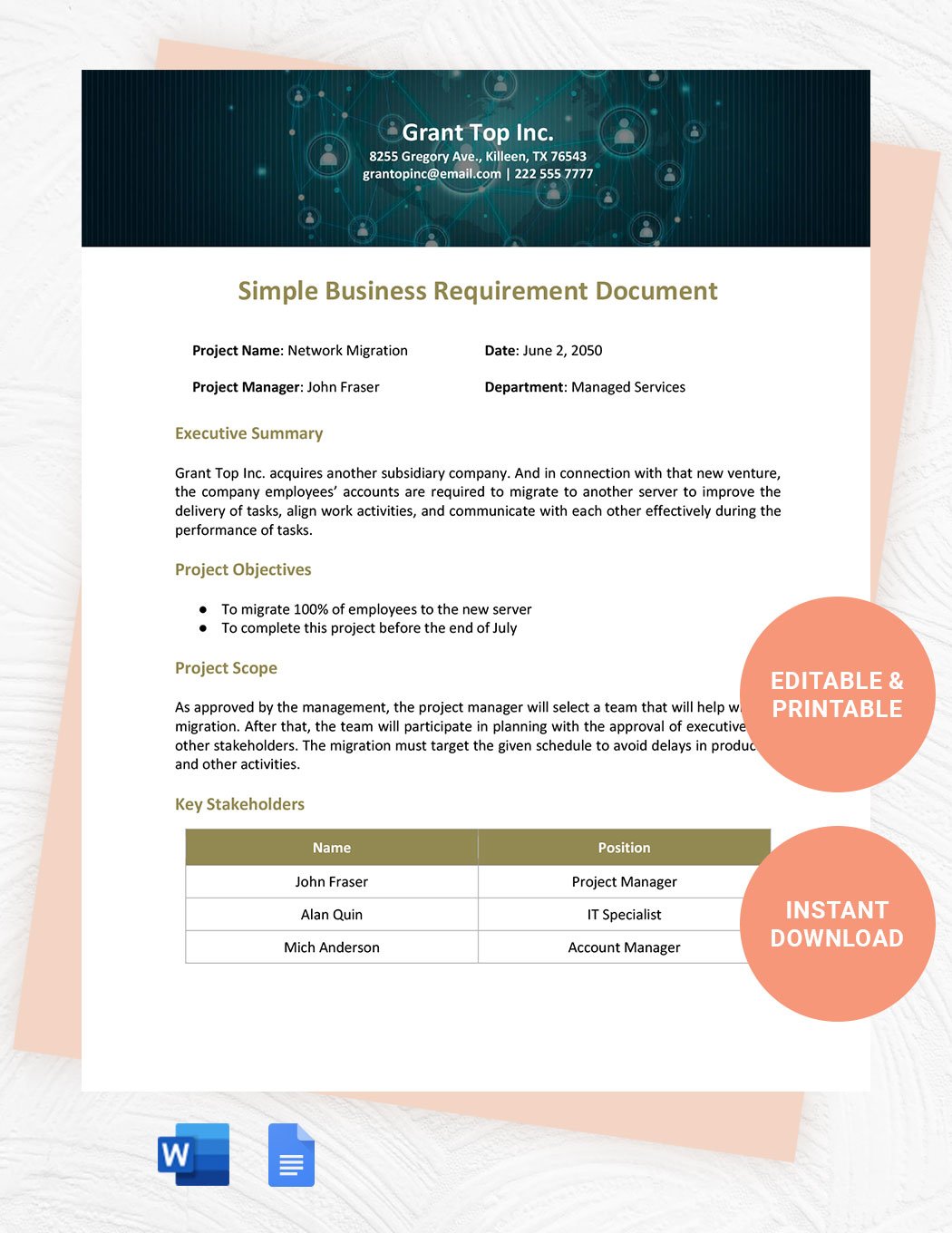
The process of gathering and documenting a business's needs is fundamental to successful project management and strategic planning. A well-structured Business Requirement Document (BRD) serves as a crucial communication tool, ensuring everyone involved – from developers to stakeholders – understands the desired outcome and can effectively contribute. This article will explore the essential components of a simple BRD template, offering practical guidance on creating a document that drives clarity and minimizes misunderstandings. Business Requirement Document Template Simple is more than just a document; it's a foundation for building successful products and services. It's a vital tool for ensuring projects stay on track, within budget, and deliver the expected value. Let's dive in.
Understanding the Purpose of a BRD
A Business Requirement Document (BRD) is a formal document that outlines the specific needs and expectations of a business for a particular project or product. It's not just a wish list; it's a detailed, documented specification of what needs to be built or delivered. A clear BRD helps to:
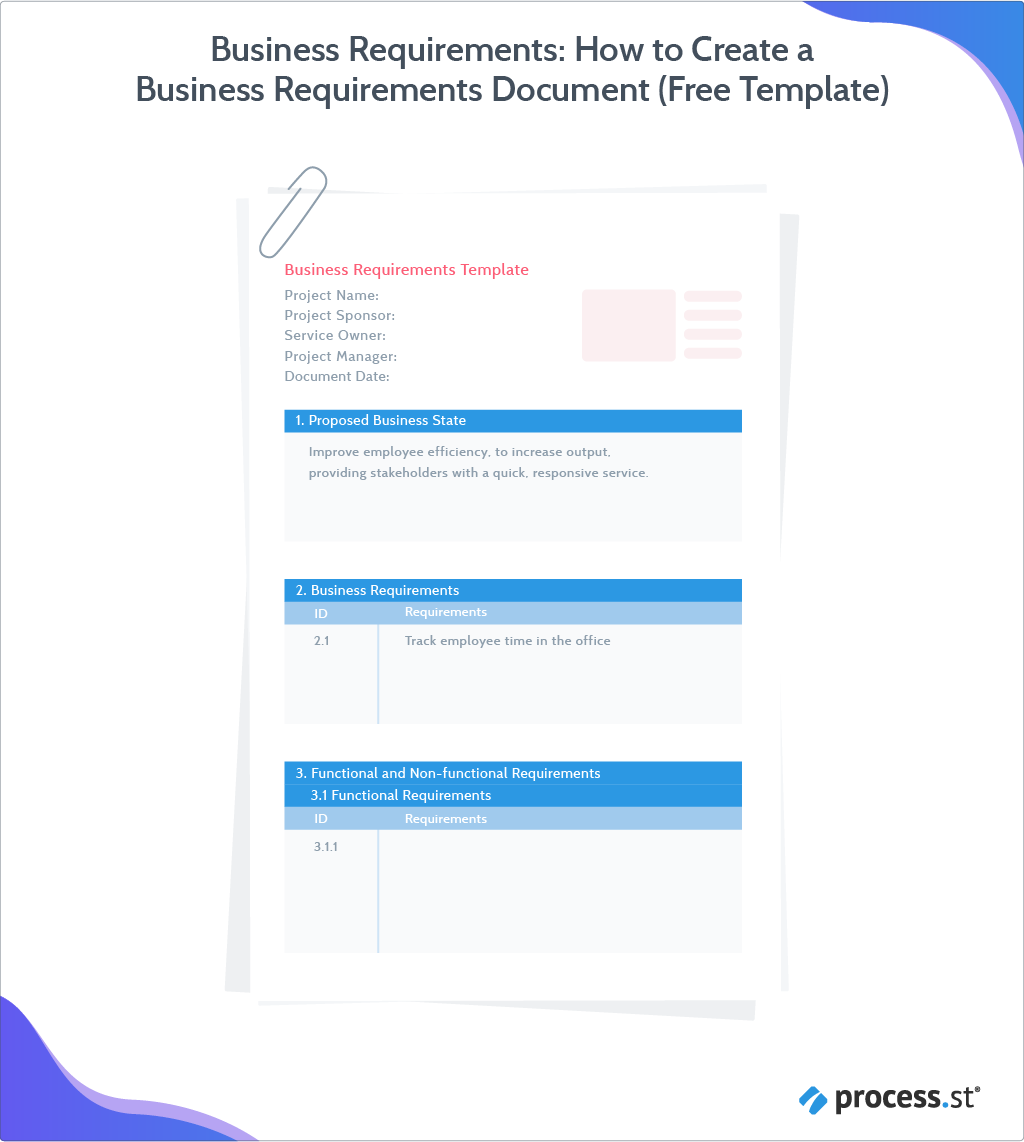
- Define Scope: Precisely define the boundaries of the project, preventing scope creep.
- Improve Communication: Provides a common language for all stakeholders, reducing misinterpretations.
- Manage Expectations: Sets realistic expectations for the project's deliverables and timeline.
- Facilitate Development: Guides the development team, ensuring they build the right solution.
- Reduce Risks: Identifies potential issues early on, allowing for proactive mitigation.
A poorly written BRD can lead to significant delays, cost overruns, and ultimately, project failure. Conversely, a well-crafted BRD fosters collaboration and ensures a successful outcome. The process of creating a BRD is often iterative, requiring ongoing feedback and refinement.
Core Components of a Simple BRD Template
Creating a robust BRD doesn't require a complex, lengthy document. A simple template, focusing on key elements, is often the most effective approach. Here's a breakdown of the essential components:
1. Introduction & Overview
The introduction sets the stage for the document and provides context. It should briefly explain the project's purpose and the overall goals. A concise overview of the document's structure is also beneficial. This section should naturally include the phrase Business Requirement Document Template Simple as a reminder of the document's core purpose.
2. Project Background & Context
This section provides the necessary background information for understanding the project. It should include:
- Business Problem: Clearly articulate the problem the project is intended to solve.
- Current Situation: Describe the existing situation and its limitations.
- Strategic Alignment: Explain how the project aligns with the overall business strategy.
- Stakeholders: Identify all key stakeholders involved in the project and their roles.
3. Functional Requirements
These describe what the system or product needs to do. They are typically expressed as functional requirements, detailing specific actions and behaviors. Examples include:
- User Authentication: The system must allow users to log in securely.
- Data Input: The system must allow users to input customer data.
- Reporting: The system must generate reports on sales performance.
- Search Functionality: The system must allow users to search for products.
Crucially, the BRD should include specific examples of how each functional requirement should work. For instance, instead of simply stating "The system must allow users to search," it should specify "The system must allow users to search by product name, category, and price range."
4. Non-Functional Requirements
These define how well the system or product performs. They address qualities like performance, security, usability, and reliability. Examples include:
- Performance: The system must respond to user requests within 3 seconds.
- Security: The system must protect user data from unauthorized access.
- Usability: The system must be easy to use and intuitive.
- Scalability: The system must be able to handle increasing user load.
- Accessibility: The system must be accessible to users with disabilities.
The BRD should explicitly state the desired levels of performance, security, and usability. For example, "The system must be accessible to users with visual impairments according to WCAG 2.1 Level AA."
5. User Stories (Optional, but Recommended)
User stories are short, simple descriptions of a feature from the user's perspective. They are a valuable way to capture user needs and ensure that the system meets the expectations of its users. Example: "As a customer, I want to be able to track my order so that I know when it will arrive."
6. Data Requirements
This section details the data that the system will need to store and manage. It includes:
- Data Fields: A list of all the data fields that will be stored.
- Data Types: The type of data for each field (e.g., text, number, date).
- Data Validation Rules: Rules that ensure the data is accurate and consistent.
7. Constraints & Assumptions
This section outlines any limitations or assumptions that may affect the project. Examples include:
- Budget: The project budget is limited to $100,000.
- Timeline: The project must be completed within 6 months.
- Technology: The system must be built using the current technology stack.
- Regulatory Compliance: The system must comply with relevant industry regulations.
The Importance of Iteration and Feedback
It's vital to remember that a BRD is not a static document. It should be viewed as a living document that evolves throughout the project lifecycle. Gather feedback from stakeholders, conduct user testing, and continuously refine the BRD to ensure it accurately reflects the project's needs. Regular review and updates are crucial for maintaining a clear and effective document.
Conclusion
Creating a well-structured Business Requirement Document (BRD) is a critical investment for any project. By systematically documenting the project's needs, you can improve communication, manage expectations, and ultimately, increase the likelihood of project success. The Business Requirement Document Template Simple provides a solid foundation for building effective BRDs. Remember to prioritize clear, concise language, and to continuously iterate and refine the document based on feedback and evolving requirements. A robust BRD is an invaluable asset for any organization striving to deliver successful projects.
0 Response to "Business Requirement Document Template Simple"
Posting Komentar